
Lee Crandall Park, M.D.
Veritas vos liberabit
(The truth will make you free)
— motto of Johns Hopkins University
About
7/24/2026
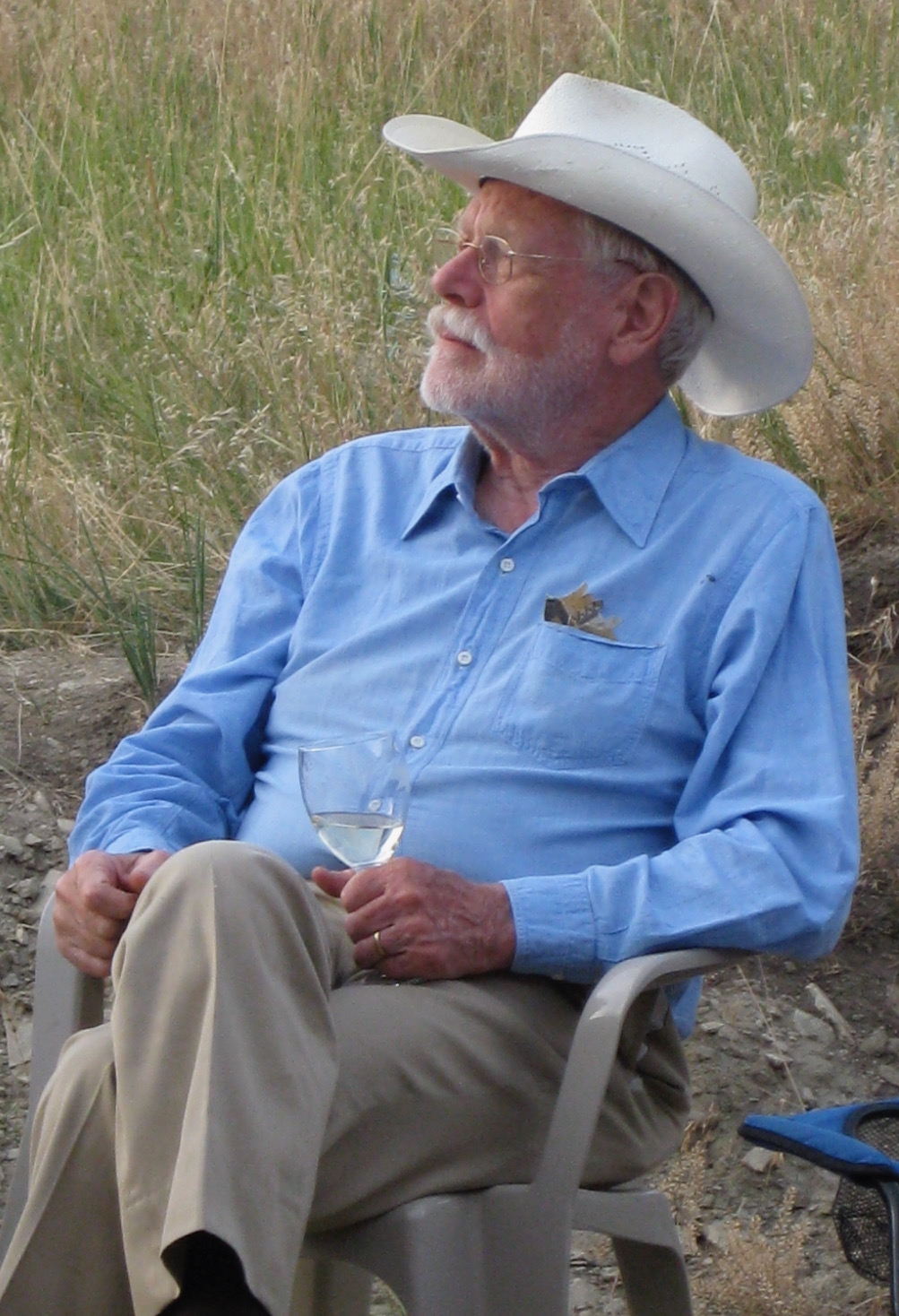
This summary has been revised to be more of a memoir now that I am 100 years old. I am Associate Professor of Psychiatry Emeritus at Johns Hopkins University School of Medicine. I am Life Fellow AAAS and Distinguished Life Fellow of the American Psychiatric Association. I was a member of the APA Assembly of District Branches for several years and I also served on the APA nominating committee. At Johns Hopkins I was active in full-time faculty and then in practice for over 55 years, and since retiring in 2015 at the age of 89 I have had more time to read the research literature as well as to consult with others, and to organize and reread years of notes that are relevant to our new monograph on Borderline Personality Disorder. This monograph is also a story about the changes for better and for worse in the field of Psychiatry, particularly research and psychotherapy, over the many years that I have been a psychiatrist
I began experiencing Dyslexia at an early age, completing elementary education at a local public school in Falls Church Virginia with only a C average. My son, Thomas, is also dyslexic, and both of us have had to make extra efforts to succeed scholastically and professionally. We had to learn how to think “out of the box” because we often failed at routine ways of learning, which has subsequently greatly benefited us in our research careers. (Quite paradoxically my other son, Jeffrey, is an excellent linguist, which has been very beneficial for him in his academic career.) I was fortunate to be accepted by the Putney Preparatory School in Vermont beginning in the 9th grade and following this wonderful educational and supportive experience I graduated from Yale University in 1948 with a B.S. in Zoology and from Johns Hopkins University School of Medicine in 1952. This was followed by an Osler Internship in Internal Medicine at Johns Hopkins Hospital 1952-53. I was then called into the Navy for two years. Due to a clerical error I was incorrectly assigned to be a staff psychiatrist at the Oak Knoll Naval Hospital in Oakland, California. This was the receiving hospital for Korean War Marine and Navy casualties, including mental breakdowns, and there was a shortage of psychiatrists there due to an unanticipated majority of patients being admitted to or ending up in the psychiatry wards. Therefore, I was not reassigned but remained on the staff as a “resident in training” although there was no such program. I was working as a regular psychiatrist, with the option for special advice and support. After a few months I was transferred to Korea to serve as a regimental surgeon in the First Marine Division Expeditionary Force as the Korean War was stabilizing in a truce. Shortly after arrival the Division Psychiatrist became ill, and I was selected for that position based on my experience at the Oakland Naval Hospital. This was a high stress situation in which there were about 30,000 battle-hardened Marines, with myself being the “psychiatrist” who had almost no formal education or training in mental illness or psychotherapy. I was essentially on my own, with a “psychologist” who had a BA degree as my assistant and a friendly Marine Captain who had some experience in counseling. This was largely an outpatient program, with a few beds for inpatients. I introduced myself to patients in Marine utility uniform as a congenial, steady and confident medical officer and psychiatrist who had all the time in the world to get to know them. I made clear that I wanted to engage personally and seriously in learning about and helping them to resolve what had been happening, what might be troubling them, and any other concerns or life experiences they might wish to talk about, and I told them I could continue to make regular appointments with them. To my great surprise I was quite successful in this endeavor, including dealing with crisis situations that involved psychotic, suicidal and dangerous patients, at a time when psychopharmacology was still in its infancy. I subsequently received a Letter of Appreciation for “Outstanding Performance of Duty” from the Commanding Officer.
This very positive experience in the field of mental illness and its treatment led to my completing a residency at Johns Hopkins Department of Psychiatry and Behavioral Sciences after leaving the Navy. Despite the prior involvement in evaluating and treating Marines in acute life situations I felt very much a neophyte when I began my residency, largely because I was intimidated by the structured guidelines that at times did not seem to align very well with my experiences in Korea, as well as by the somewhat esoteric teachings of psychoanalysis. Along with some other residents I engaged in a psychoanalysis (with Sarah Tower), which was beneficial, but some of the learning experiences and confidence that I had gained in Korea had faded away. I did not understand until considerably later that in Korea I had been experiencing the essence of successful psychotherapy for almost all of my patients as the nature and characteristics of the interpersonal engagement, and that this could be quite successful even in the absence of the specific guidelines of the various psychotherapies. Following residency, I became a full-time faculty member at Johns Hopkins School of Medicine. I worked in the psychiatry outpatient program at the hospital, and subsequently I was also placed in charge of mental health counseling for both students and faculty at the George Wilson Shaffer Student Health Service on the Homewood campus of Johns Hopkins University, . Dean Shaffer was a wonderful person and a supportive mentor. I was initially somewhat uneasy when engaging in psychotherapy with faculty members, several of them senior academics, until I gradually learned that Social Intelligence abilities for understanding self and others could be quite independent from other talents. A high IQ might lead to more complex stories, but underlying Theory of Mind (ToM) and relationship difficulties did not differ in significant ways from those of the Marines seen in Korea.
Beginning in 1959 I also became a member of the new “Drug-Set” Research Program of the NIMH Psychopharmacology Service Center (PSC.) The PSC was created by Jonathan O. Cole, who later became a professor at Harvard where the Cole Center is named after him. Cole was “the father of clinical psychopharmacology in the United States, internationally known for his breakthrough research in the use of drugs to treat psychiatric illnesses” (Wikipedia). The PSC Drug-Set Program carried out double-blind studies of drugs for mental illness in collaboration with Johns Hopkins and the University of Pennsylvania. This clinical research was at the beginnings of the new field of Psychopharmacology, following on the discovery of Thorazine for Schizophrenia a few years earlier. Psychotherapy was still the key treatment for mental illness, and so our clinical research focused not only on understanding “Drug” influences on patient responses, but also on understanding “Set” (setting) influences, i.e. the patient expectations and the characteristics of the setting in which the drug was prescribed, particularly the prescriber’s verbal and emotional communications. (Full texts of our studies can be found at my website.)
At that time the discovery that Thorazine could provide a major reduction in the symptomatology of Schizophrenia was bringing about dramatic changes in the field of Psychiatry. There was broad enthusiasm that mental illnesses could be considered medical illnesses, and researchers became heavily focused on discovering more medical treatments. At the same time there was also a developing loss of interest in examining the patient’s life experiences and personality features, as well as in psychotherapy, as pertinent to understanding and treating mental illness. It can be helpful for understanding this rapidly expanding medicalization of Psychiatry to consider that medical schools have Departments of Psychiatry, which indicates that mental illnesses are medical illnesses. The official textbook of Psychiatry, published by the American Psychiatric Association, is titled “Diagnostic and Statistical Manual of Mental Disorders” (DSM). Its format and content are organized in line with medical texts. There have always been debates about whether there should be such a full alignment of mental illnesses with medical illnesses, considering that the workings of the mind cannot be directly examined by the standard medical methods. Allen Frances has reviewed these issues extensively. Nevertheless, by the later 1960’s there were increasing arguments, largely by psychopharmacologists, for the official medicalization of psychiatry, with the conviction, but without any significant supportive evidence, that using medical methods for discovering inborn neuropathologies and for discovering ways to correct them was not only primary for understanding and treating serious mental illnesses, but that the interpersonal engagement with a patient and the examination of her/his developmental social history could provide only secondary, non-medical information that would seldom, if at all, be necessary for researchers to further examine carefully. This gradually resulted in a major decrease in examining non-medical factors in both psychiatric research and treatment. This has been quite unfortunate since the interpersonal engagement of the researcher’s MIND with the patient’s MIND continues to be the ONLY way to directly obtain information about the ongoing content and workings of the patient’s MIND, which remains essential for sufficiently understanding and successfully treating most disorders of the MIND, i.e. mental illnesses. Also, during an appropriately personal engagement over a necessary period of time a patient can feel a meaningful experience of becoming known, understood, respected and cared about, which can align with important attachment and other relationship difficulties that are common in mentally ill patients. The patient can then engage collaboratively in a trusting relationship with the interviewer, while freely communicating thoughts and feelings as well as information about significant life experiences, all of which is necessary for psychotherapy to be sufficiently beneficial. Remarkably even a single positive interpersonal engagement can result in a meaningful degree of symptomatic improvement, which has been demonstrated in almost all clinical drug studies, including our 1965 placebo study described below.
In 1964 I carried out, with Lino Covi, the “Nonblind Placebo Trial”, which was published in Archives of General Psychiatry in 1965. This study demonstrated the clinical significance of the introductory interviews taking place in all drug studies. The study was carried out in the setting of our drug-set research with the NIMH Psychopharmacology Service Center. Fifteen new outpatients with psychoneuroses were provided with a carefully planned and quite positive initial evaluation. They were then asked if they would agree to a brief trial in which “sugar” pills would be prescribed, making very clear that these pills contained no medicine at all. They were advised that the pills should be taken three times a day at meals. They were also informed that many people with their kind of condition had been helped when taking such pills, which was true. This and other information and directions were scripted along guidelines that had been developed in the drug-set studies. Fourteen patients willingly entered this very brief trial and all but one reported significant improvement, demonstrating that patients can be willing to take placebos and can improve despite disclosure of their inert content. (The patient who did not improve was also feeling much better until her husband ridiculed her for taking sugar pills.) This was the first reported study EVER in which it was revealed to patients that pills being prescribed had no active content, and it had required a special review by the Chairman and other leaders of the Department prior to proceeding. The result is in alignment with our belief and experience that the development of a genuine, positive, and appropriately personal engagement with a trusted professional, of necessary duration, can be essential for successful treatment of patients with mental illness, and can often be effective in the absence of using a specific treatment model. The study was reported in numerous media sources in the US and other countries, and the guidance we have provided to other researchers about how to plan and conduct such a study has helped lead to the confirmatory research, such as at Harvard.
I have been asked numerous times to explain how we came up with this strange plan to present a positive introduction and then reveal to patients that pills being prescribed contained no medication at all. This idea came up in the context of our ongoing NIMH Drug-Set research meetings, and in these many meetings we were encouraged to express new and creative ideas. A second factor was my prior surprising success providing psychotherapy for disturbed Marines in the absence of formal education or training for treating mental illness. I have been pondering that experience over the years and have come to believe that this was an accidental experiment testing the psychotherapeutic benefits of a positive conversational engagement in the absence of formal training. A third factor was my learning experience from John Clare Whitehorn, M.D., Chairman of the Johns Hopkins Department of Psychiatry during my residency. Whitehorn was a brilliant psychiatrist who possessed great wisdom and humanity. He had worked for numerous years in biochemical and physiological research prior to moving on to psychiatry. During that earlier period he had accidentally discovered the remarkable benefit of his routine, congenial, at times extended “Conversations” for reducing mental distress in mentally ill lab subjects. His subsequent seminal research in psychiatry demonstrated the benefits of empathic, engaged “Conversations” for significant improvement of patients hospitalized with Schizophrenia, as well as other mental illnesses. During the 1950’s Whitehorn and Barbara Betz identified specific personal characteristics of those residents whose routine communications had resulted in these successful “therapeutic alliances” with Schizophrenia patients versus those whose communications had not. So my thinking was, if the personal conversation can be so beneficial, even for Schizophrenia, why not develop a sufficiently positive alliance during an initial interview and then prescribe placebos while identifying them for what they are. Whitehorn was President of the American Psychiatric Association among other prestigious roles. During the subsequent transition of psychiatry from the preeminence of psychotherapy to the preeminence of pharmacotherapy his work became increasingly criticized and disparaged, and now, sadly, he is almost completely forgotten. (A fascinating discussion by Whitehorn, subsequent to retirement, about his research demonstrating the critical importance of the doctor’s routine ways of communicating can be found by searching Google for “John Whitehorn and Conversations” or directly on Youtube in the video “JHU dialogues: John C. Whitehorn.”)
Our drug-set research team considered the term “Placebo Effect” to be not only meaningless, since the pill by itself cannot generate anything at all, but that it also obscured the actual reason patients improve symptomatically when placebos are prescribed. Since a placebo is a fully inactive substance the sources of improvement must be the patient’s expectations and the prescriber’s degrees of positivity, interest, competence, sincerity, trustworthiness and warmth, which are all features of PSYCHOTHERAPY. The use of the word, “Effect”, suggesting an actual medical influence of the placebo, seems to be a somewhat confused way of explaining why a placebo gets in the way of research proving that a new drug is effective. Unfortunately the use of this term has contributed to the inadequate research attention given to the therapeutic benefit of the brief initial interviews taking place in most drug studies. We prefer to call this the “BRIEF PSYCHOTHERAPY EFFECT”. Our study adds to the overwhelming evidence that we must rescue psychotherapy from the secondary role to which it has been confined following the discovery of Thorazine. At the age of 100 I have lived through this transition era from the centrality of psychotherapy to the centrality of psychopharmacology, and so I can understand it all too well.
My thinking about the origins, nature and treatments of mental illness has progressed over the course of the many years that I have been a psychiatrist, during which I have been influenced by numerous schools of thought, including particularly Meyerian (Adolf Meyer), Psychoanalytic, Psychodynamic, Time-Limited, DBT, Whitehorn and the current Medical Model. This varied history, along with my experiences in Korea, has benefitted me considerably in thinking about mental illness and its treatment. For a time I was Director of Psychiatric Outpatient and Community Services at Johns Hopkins Hospital, but by then I was becoming quite disappointed with the increasingly narrow research focus on discovering inborn neurobiological flaws and medical treatments for them, along with the decreasing research interest in psychotherapy and in exploring the childhood/adolescent developmental social experience as likely crucial to proper development of and workings of the mind. As I gradually moved to part-time and then full-time private practice I was developing a strong interest in Personality Disorders, particularly Borderline and Narcissistic Disorders and I have had the time to carry out research on my own. I have been the therapist for numerous borderline patients and have then followed some of them for up to 50 years, which has provided a rather special learning experience. In 1992 we reported a study of Borderline Personality Disorder (BPD) that focused on the histories of childhood psychological abuse and the evidence of enhanced social perceptivity. Co-authors included John B. Imboden M.D., Director of the Psychiatric Inpatient Service at Johns Hopkins Hospital, Stewart H. Hulse Ph.D., Chair of the Psychology Department at Johns Hopkins University, and Thomas J. Park Ph.D., currently Professor of Neuroscience and Associate Department Head of Biological Sciences at the University of Illinois, Chicago. In 1997 Thomas Park and I also co-authored a book chapter on “Personal Intelligence” (Human Social Intelligence) and its likely involvement in BPD.
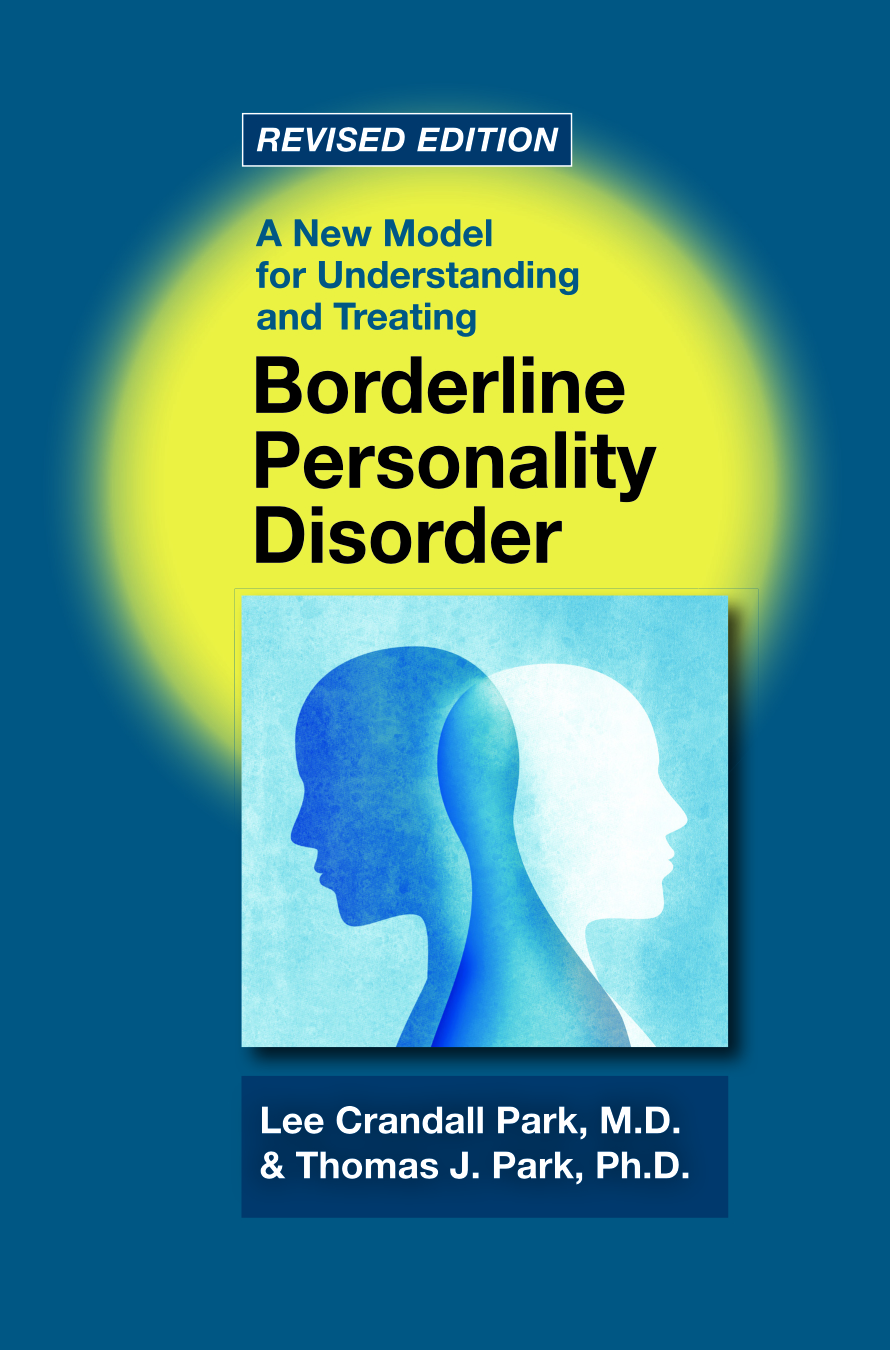
I have now co-authored, with Thomas Park, a monograph, “A New Model for Understanding and Treating Borderline Personality Disorder”, which presents argument and evidence that Borderline Personality Disorder is almost always a fully developmentally engendered disorder of Theory of Mind that occurs in the absence of any inherent genetic defects, limitations or other predispositions. Both the currently accepted Diathesis-Stress Model and our developmentally engendered model argue that inherent genetic factors together with adverse childhood experiences underlie the disorder. The former model is a Medical Model arguing that inherent, flawed neurobiological predispositions engage with childhood abuse that is largely physical and sexual. Our new model argues and presents evidence that the inherent factor is not only perfectly normal but is an enhancement of the neurobiological faculty for Theory of Mind. The adverse childhood experiences are interferences with a child’s development of the mind that persist on an everyday basis throughout childhood, resulting in general maldevelopment of Theory of Mind. The complex, sometimes paradoxical, clinical characteristics of BPD align with this new model, and can now be easily explained.
With regard to treatment, if we are correct that Borderline Personality Disorder is a developmentally engendered disorder, with no underlying inherent deficiencies, then we should find that there is poor response to medical treatments. This has been fully verified. Although drugs can provide some symptomatic improvement, they fail to resolve the disturbed workings of the mind itself that are at the basis of the disorder, particularly the self-dislike, the painful feelings of emptiness, the distrust of others and the failing relationships. Only psychotherapy can resolve these developmentally learned psychopathologies of Theory of Mind by providing a new Theory of Mind learning experience that helps the patient correct them. This requires the therapist to develop an actual working relationship with the patient, genuinely engaging his/her mind in interaction with the patient’s mind, which presents significant challenges because borderline patients are often successful in provoking boundary difficulties and confusion in therapists. As a result, residents are advised to be quite guarded with these patients, but this advice must be accompanied with training for engaging in the necessary, appropriately genuine, relationship in which the guardedness is minimally expressed. The patient must gradually become secure enough to join with the therapist in learning about and understanding the workings of both her/his mind and the communications from the therapist’s mind. The complexity involved in developing a genuine and trusted relationship with challenging patients, while simultaneously maintaining equanimity, alertness to one’s own vulnerabilities, and appropriate boundaries, presents a sharp reminder that we must work to bring back a stronger commitment to psychotherapy training and research. This is a critical necessity because there has not so far been any alternative medical treatment that can resolve learned Theory of Mind psychopathologies, although there are now suggestions that psychedelic influences on the mind could provide a significant aid to psychotherapy.
This psychotherapy model requires the clinician to have or learn to have good self-understanding, to be able to have successful relationships, and to have the ability and wisdom for revealing appropriate degrees of his/her true self, while still maintaining necessary boundaries. The importance of these and other personal characteristics for successful treatment of patients with mental illness should be considered when interviewing applicants for residency.
In completing this monograph as a “memoir” of a long professional life, I have been thinking of the words of Horace Mann: “Be ashamed to die until you have some victory for humanity.”
7-24-2026
Website: leecrandallparkmd.net
Full Text of Monograph and other publications: https://tinyurl.com/leeparkbibliography
E-mail: lpark3@jhmi.edu

(motto of Johns Hopkins Medicine)
Sir William Osler,
Knighted in 1911
CURRICULUM VITAE
EDUCATION
1944
Grad. Putney Preparatory School, Putney, VT.
1948
B.S., Yale University (Zoology).
1952
M.D, Johns Hopkins University School of Medicine.
1952-1953
Intern in Medicine, Osler Service, Johns Hopkins Hospital.
1953-1955
Medical Officer USNR: Psychiatric Resident and Hospital Staff Psychiatrist; Regimental Surgeon and Division Psychiatrist, 1st Marine Division Korea. (Letter of Appreciation, Commanding Officer, “Outstanding Performance of Duty”). Medals: Korean Service, National Defense Service, United Nations
1955-1959
Psychiatric Residency, Henry Phipps Psychiatric Clinic, Johns Hopkins Hospital; Post Doctoral Fellow in Johns Hopkins University.
Diplomate National Board of Medical Examiners. Licensed Maryland and California.
Certified by American Board of Psychiatry and Neurology in Psychiatry.
POSITIONS
1959 -2009 Faculty, Department of Psychiatry and Behavioral Sciences, Johns Hopkins University School of Medicine. Associate Professor 1970 to present (Emeritus since 2009).
1961 – 1973 Physician in charge of Psychiatric Services, Student Health Service, Johns Hopkins University.
1964 – l981 Psychiatric Consultant, Office of Disability Programs, Social Security Administration.
1966 -1973 Attending Staff, Seton Psychiatric Institute. (Executive Coordinating Board l970 -l973).
1970 – 2009 Staff (Associate to Honorary), Department of Medicine, Johns Hopkins Hospital.
1972 -1974 Director, Psychiatric Outpt. Services & Community Psych. Program, Johns Hopkins Hospital.
1974 – l976 Departmental Council, Dept. of Psychiatry and Behavioral Sciences, Johns Hopkins Hospital.
1974 – 2015 Full-Time Private Practice of Psychiatry (Individual, Group, Marital, Family Therapy; Adolescents, Adults).
1974 -1976 Psychiatrist Consultant, University of Notre Dame, Baltimore.
1974 – 2002 Courtesy Staff and Preferred Psychiatrist Affiliate, Dept. of Psychiatry and Medicine, Sheppard and Enoch Pratt Hosp.
1981 – 1986 Clinical Faculty, Dept. of Psychology and, Counseling and Psychiatric Services, Johns Hopkins University, Homewood.
MEMBERSHIPS
• American Psychiatric Association: Distinguished Life Fellow; Member Assembly of District Branches 1983-1993; APA Nominating Committee 1990-1991; Consultant to APA Task Force on Treatments of Psychiatric Disorders 1989; Reviewer, American Journal of Psychiatry 1978-1994.
• American Medical Association.
• American Psychosomatic Society. (Now Society for Biopsychosocial Science and Medicine)
• American College of Neuropsychopharmacology.
• International Society for the Study of Personality Disorders.
• Society for Interdisciplinary Placebo Studies.
• American Association for the Advancement of Science (Life Fellow).
• American Association of University Professors.
• Maryland Psychiatric Society (President l978-1979).
• Maryland Foundation for Psychiatry (Board 1995-2003; President 2000-2003 ).
• Maryland Interdisciplinary Council for Children and Adolescents (1978-1998)
• Metropolitan Baltimore Association for Mental Health.
• Medical and Chirurgical Faculty of the State of Maryland.
• New York Academy of Sciences.
• Baltimore City and Baltimore County Medical Societies.
• Johns Hopkins Medicine Alumni Association.
RESEARCH
- Participant in Dr. Jerome Frank’s study of placebo effect: 1959.
- Co-Principal Investigator: Controlled Study of the interaction of Therapists’ Personal Characteristics and of Medication (imipramine, placebo) in the Treatment of Depression, USPHS Grant M-3741A: l959-1960. (With E.H. Uhlenhuth, M.D.)
- Methionine Ingestion in Schizophrenic Patients treated with Monoamine Oxidase Inhibitors, USPHS Grant MH-5521: l96l-l962. (With S.S. Kety, M.D. and R.J. Baldessarini, M.D.)
- Principal and Co-Principal Investigator: NIMH-PRB Outpatient Study of Drug-Set Interaction, USPHS Grant MH-04732: 1960 1968. (With E.H. Uhlenhuth, M.D. and L. Covi, M.D.)
- Co-Project Director: A controlled Study of Time-Limited Psychotherapy, USPHS Grant MH-16056: l969-1973. (With E. Meyer, M.D.)
- Clinical research of Borderline and Narcissistic Conditions: Etiology, Characteristics and Treatment.
- Psychiatric Research Network, American Psychiatric Assn: 1994-2002.
BIBLIOGRAPHY
A bibliography is also at tinyurl.com/leepark_bibliography.pdf.
HIGHLIGHTS
- Park, L.C. and Covi, L. “Non-blind placebo trial: An exploration of neurotic patients’ responses to placebo when its inert content is disclosed.” Arch. Gen. Psychiat. 12:336-345, l965. https://doi.org/10.1001/archpsyc.1965.01720340008002 | Download as PDF
- Gaab, Jens; Nascimento, Antje Frey; Wehlage, Clara; and Park, Lee C. “The first on the dark side of the moon: Revisiting the first nonblind placebo trial,” Journal of Psychosomatic Research, February 2026 | https://doi.org/10.1016/j.jpsychores.2026.1125656
PLACEBO TRIAL ARTICLE REVIEWS AND COMMENTS – 1965-67
- “Expectancies in psychotherapy influence ultimate outcome,” Roche Report: Frontiers of Clinical Psychiatry, Nutley, NJ, July 1, 1965. | Download as PDF
- “The Misuse of Happy Pills,” Better Homes and Gardens, April 1967. | Download as PDF
- “Johns Hopkins MDs Explore ‘Placebo Effect; 14 Patients Swear Sugar Pills Were Curative,” Drug Topics, May 17, 1965. | Download as PDF
- “Editorial #1: Happiness is a Pink Pill,” WWDC Broadcast, June 22, 1965. | Download as PDF
- “Nonblind Placebo Trial,” Associated Press Teletype,1965. | Download as PDF
- “A Bizarre Demonstration,” Baltimore News-American, June 17, 1965. | Download as PDF
- “Patients Knowingly Take Fake Pills, Still Feel Better,” Baltimore Sun, June 16, 1965. | Download as PDF
- Collection of 27 articles about the placebo trials from various newspapers, 1965 | Download as PDF
- “Magic Medicine: The Placebo,” Johns Hopkins Magazine, August 1983 | Download as PDF
- Park, L.C., Imboden, J.B., Park, T.J., Hulse, S.H. and Unger, H.T. “Giftedness and psychological abuse in borderline personality disorder: Their relevance to genesis and treatment.” Journal of Personality Disorders, 6: 226-240, 1992. https://doi.org/10.1521/pedi.1992.6.3.226 | Download as PDF
- Park, L.C. “Does this patient need psychiatric referral? Borderline personality disorder is serious, life-threatening, and fairly common, yet it goes unrecognized by most physicians.” Hospital Medicine, 30: 36-42, l994. [Reprinted in Tiempos Medicos.] | Download as PDF
- Park, L.C. and Park, T.J. “Personal Intelligence.” In McCallum, M. and Piper, W.E. (eds.) Psychological Mindedness: A Contemporary Understanding, Chapter 6, pp. 133-167, 1997 Lawrence Erlbaum Associates, Inc., Mahwah, NJ | Download as PDF
- Park, L.C. “Psychiatry at Johns Hopkins Hospital.” In The Maryland Psychiatric Society: Celebrating 50 Years, pp 36, 42, Maryland Psych. Soc., Baltimore, 2000. | Download as PDF
BOOKS
- Park, L. C. and Park, T.J., A New Model for Treating Borderline Personality Disorder, Revised Edition, Herron Creek Press LLC, 2024. | See More Information
- Allen, T.E., Liebman, M.C., Park, L.C., and Wimmer, W.C., A Primer on Mental Disorders: A Guide for Educators, Families, and Students, Scarecrow Press, Lanham, MD, 2001. | Via Amazon as Kindle, Hardcover, and Paperback
OTHER PUBLICATIONS
1. Uhlenhuth, E.H. and Park, L.C. “The influence of medication (imipramine) and doctor in relieving depressed psychoneurotic outpatients. ” J. Psychiat. Res. 2:101-122, 1964. https://doi.org/10.1016/0022-3956(64)90006-8 | Download as PDF
2. Park, L.C. and Lipman, R.S. “A comparison of patient dosage deviation reports with pill counts.” Psychopharmacologia 6:299 302, l964. https://doi.org/10.1007/bf00413160 | Download as PDF
3. Fisher, S., Cole, J.O., Rickels, K., and Uhlenhuth, E.H. “Drug-set Interaction: The Effect of Expectations on Drug Response in Outpatients.” Neuropsychopharmacology 3:149-156, l964. | Download as PDF
4. Fisher, S., Lipman, R.S., Uhlenhuth, E.H., Rickels, K. and Park, L.C. “Drug effects and initial severity of symptomatology.” Psychopharmacologia 7:57-60, l965. https://doi.org/10.1007/bf00404165 | Download as PDF
5. Lipman, R.S., Hammer, H. M., Bernardes, J.F., Park, L.C. and Cole, J.O. “Patient report of significant life situation events: Methodological implications for outpatient drug evaluation.” Dis. Nerv. Syst. 26: 586-591, l965. | Download as PDF
6. Park, L.C., Baldessarini, R.J. and Kety, S.S. “Methionine effects on chronic schizophrenics: Patients treated with monoamine oxidase inhibitors.” Arch. Gen. Psychiat. 21:346-351, l965. https://doi.org/10.1001/archpsyc.1965.01720340018003 | Download as PDF
7. Uhlenhuth, E.H., Park, L.C., Lipman. R.S., Rickels, K., Fisher, S. and Mock, J.E. “Dosage deviation and drug effects in drug trials.” J. Nerv. Ment. Dis. 141:95-99, l965. https://doi.org/10.1097/00005053-196507000-00009 | Download as PDF
8. Park, L.C., Uhlenhuth, E.H., Lipman, R.S., Rickels, K. and Fisher, S. “A comparison of doctor and patient improvement ratings in a drug (meprobamate) trial.” Brit. J. Psychiat. 111:535-540, l965. https://doi.org/10.1192/bjp.111.475.534 | Download as PDF
9. Lipman, R.S., Cole, J.O., Park, L.C. and Rickels, K. “Sensitivity of symptom and nonsymptom-focused criteria of outpatient drug efficacy.” Amer. J. Psychiat. 122:24-27, l965. https://doi.org/10.1176/ajp.122.1.24 | Download as PDF
10. Lipman, R.S., Rickels, K., Uhlenhuth, E.H., Park, L.C. and Fisher, S. “Neurotics who fail to take their drugs.” Brit. J. Psychiat. lll: 1042-1049, l965. https://doi.org/10.1192/bjp.111.480.1043 | Download as PDF
11. Uhlenhuth, E.H., Rickels, K., Fisher, S., Park, L.C., Lipman, R.S. and Mock, J.E. “Drug, doctor’s verbal attitude and clinic setting in the symptomatic response to pharmacotherapy.” Psychopharmacologia 9:392-418, l966. https://doi.org/10.1007/bf00406450 | Download as PDF
12. Lipman, R.S., Park, L.C. and Rickels, K. “Paradoxical influence of a therapeutic side-effect interpretation.” Arch. Gen. Psychiat. 15:462-474, l966. https://doi.org/10.1001/archpsyc.1966.01730170014004 | Download as PDF
13. Park, L.C., Slaughter, R., Covi, L. and Kniffin, H.C., Jr. “The subjective experience of the research patient: An investigation of psychiatric outpatients’ reactions to the research treatment situation.” J. Nerv. Ment. Dis. 143:199-206, l966. https://doi.org/10.1097/00005053-196609000-00001 | Download as PDF 1 | Download as PDF 2
14. Rickels, K., Snow, L., Uhlenhuth, E.H., Lipman, R.S., Park, L.C. and Fisher, S. “Side reactions on meprobamate and placebo.” Dis. Nerv. Syst. 28:39-45, l967. PMID 5334842 | Download as PDF 1
15. Park, L.C., Covi, L. and Uhlenhuth, E.H. “Effects of informed consent on research patients and study results.” J. Nerv. Ment. Dis., l45:349-357, l967. https://doi.org/10.1097/00005053-196711000-00001 | Download as PDF 1 | Download as PDF 2
-
INFORMED CONSENT ARTICLE REVIEWS AND COMMENTS – 1965-67
-
- “Informed Consent,” Sandoz Psychiatric Spectator, Vol. IV, No. 8, May 8-12, 1967. | Download as PDF
- “‘Informed Consent’ Viewed as No Obstacle To Research,” Psychiatric Progress, Vol. 2, No. 4, June 1967. | Download as PDF
- “Effects of Informed Consent on Research Patients and Study Results,” Digest of Neurology and Psychiatry, June-July 1965. | Download as PDF
-
16. Uhlenhuth, E.H., Lipman, R.S., Rickels, K., Fisher, S., Covi, L., and Park, L.C. “Predicting the relief of anxiety with meprobamate: Non-drug factors in the response of psychoneurotic outpatients.” Arch. Gen. Psychiat., 19:619-630, l968. https://doi.org/10.1001/archpsyc.1968.01740110107014 | Download as PDF AGP| Download as PDF CMD
17. Uhlenhuth, E.H., Duncan, D.B. and Park, L.C. “Some nonpharmacologic modifiers of the response to imipramine in depressed psychoneurotic outpatients: A confirmatory study.” In May, P.R.A. and Wittenborn, J.R. (eds.) Psychotropic Drug Response: Advances in Prediction, pp. 155-197, Charles C. Thomas, Springfield, IL., l969. | Download as PDF
18. Covi, L., Park, L.C., Lipman, R.S., Uhlenhuth, E.H. and Rickels, K. “Factors affecting withdrawal response to certain minor tranquilizers.” In Cole, J.O. and Wittenborn, J.R. (eds.) Drug Abuse: Social and Psychopharmacological Aspects, pp. 93-108, Charles C. Thomas, Springfield, IL., l969. | Download as PDF
19. Rickels, K., Howard, K., Lipman, R.S., Covi, L., Park, L.C. and Uhlenhuth, E.H. “Differential reliability in rating psychopathology and global improvement.” J. Clin. Psychol., 26:320-323, l970. https://doi.org/10.1002/1097-4679(197007)26:3%3C320::aid-jclp2270260320%3E3.0.co;2-p | Download as PDF
20. Imboden, J.B. and Park, LC. “Dissociative Reactions.” In Tice’s Practice of Medicine, Vol. 10, Chapter 38, pp. l9-24, Harper and Row, Hagerstown, MD., l970. | Download as PDF
21. Rickels, K., Lipman, R.S., Fisher, S., Park, L.C. and Uhlenhuth, E.H. “Is a double-blind clinical trial really double blind? A report of doctors’ medication guesses.” Psychopharmacologia, 16:329-336, l970. https://doi.org/10.1007/bf00404739
22. Park, L.C. and Imboden, J.B. “Clinical and heuristic value of clinical drug research.” J. Nerv. Ment. Dis., 151:322-340, l970. https://doi.org/10.1097/00005053-197011000-00005 | Download as PDF
23. Rickels, K., Lipman, R.S., Park, L.C., Covi, L., Uhlenhuth, E.H. and Mock, J.E. “Drug, doctor warmth, and clinic setting in the symptomatic response to minor tranquilizers.” Psychopharmnacologia, 20: 128-152, l97l. https://doi.org/10.1007/bf00404367 | Download as PDF
24. Uhlenhuth. E.H., Covi, L., Rickels, K., Lipman, R.S. and Park, L.C. “Predicting the relief of anxiety with meprobamate: An attempt at replication.” Arch. Gen. Psychiat., 26: 85-91, l972. https://doi.org/10.1001/archpsyc.1972.01750190087016 | Download as PDF
25. Park, L.C. “What limitations should exist on psychiatric evaluations of individuals done for government and other third parties?” The Maryland Psychiatrist, 1:2, l974.
26. Meyer, E., Derogatis, L.R., Miller, J.M. Park, L.C. and Whitmarsh, G.A. “Medical Clinic patients with emotional disorders.” Psychosomatics, 19:611-619,l978. https://doi.org/10.1016/s0033-3182(78)70920-5
27. Meyer, E., Derogatis, L.R., Miller, M.J., Reading, A.J., Cohen, I.H., Park, L.C. and Whitmarsh, G.A. “Addition of time limited psychotherapy to medical treatment in a general medical clinic: Results at one-year follow-up.” J.Nerv. Ment. Dis., 169:780-790, l98l. https://doi.org/10.1097/00005053-198112000-00006 | Download as PDF
28. Imboden, J.B. and Park, L.C. “Conversion Reactions.” In Spittell, J.A., Jr. (ed.) Clinical Medicine, Chapter 35, pp.l-5, Harper and Row, Philadelphia, PA. l98l. | Download as PDF
29. Park, L.C. and Imboden, J.B. “Dissociative Reactions.” In Spittell, J.A., Jr. (ed.) Clinical Medicine, Chapter 36, pp. l-5, Harper and Row, Philadelphia, PA., l98l. | Download as PDF
30. Park, L.C. “The APA Assembly in Action.” Maryland Psychiatric Society News, 2:2-3, 1988.
31. Park, L.C. “Positive outlook enhances `golden years’.” Senior Digest, 13:18, 1989. | Download as PDF
32. Park, L.C. “Psychiatry ignoring child abuse and neglect movement.” Psychiatric News, 27:14, l992. | Download as PDF
OTHER INFORMATION
Lineage/Patriotic/Social Organizations:
- General Society of the War of 1812: President Maryland Society 2004-2006; Surgeon General 2012-2017;
District Deputy President General, 2017-2025 - General Society of Colonial Wars
- National Society Sons and Daughters of the Pilgrims: Maryland Branch: Governor 2006-2008
- General Society Sons of the Revolution: State of Maryland Board of Managers 2006-2008; General Surgeon 2015-2018
- National Society of the Sons of the American Revolution: Surgeon General 2009-2011; State of Maryland: Surgeon: 2002-2025
- Descendants of Mexican War Veterans
- National Huguenot Society: Surgeon General 2005-2008
- The Royal Society of St. George. Saint George’s Society of Baltimore
- The Holland Society of New York: Associate/Friend
- St. Nicholas Society
- Maryland Center for History and Culture (Maryland Historical Society)
- Yale Club of NYC
- Metropolitan Club of DC
- Social Register Association
- Several Family Associations
Immediate Family
- Spouse: Mary Woodfill Park: Corporate Librarian, Information Consultant for Business and Family Hhistory, Author, Genealogist
- Two Sons: Both graduates of Johns Hopkins University:
- Thomas Joseph Park, Ph.D., Tenured Professor of Neuroscience and Associate Head of Department of Biological Sciences, Univ. of Illinois Chicago. His wife is a journalist (retired), Chicago Tribune. 1 child, 1 grandchild.
- Jeffrey Rawson Park, MA: Coordinator for Scientific English & Intermediate English at George-August University, Goettingen, Germany. His wife has a Masters in Biology and is a researcher at the Max Planck Institute for Multidisciplinary Sciences. 2 children, 6 grandchildren.
- Father-Lee I. Park (1895-1978): LL. B. cum laude Univ. of Chicago Law School. Sr. Partner, Hamel, Park, McCabe and Saunders, Washington, DC. World War II: Colonel J.A.G.D. and General Staff Corps, AUS, 1942-1946 (Legion of Merit, Army Commendation Ribbon). World War I: Cadet 57* Squadron (Bombadier) Air Service, US Army, 1918. www.wwiimemorial.com. Listed in Marquis Who Was Who in America, Vol 7. Died fishing 1978 at Sioux Charlie Lake of the Stillwater River near family cabin in the Beartooth Mountains of Montana.
- Mother-Alice Mary (Crandall) Park (1901 – 2006): Graduate University of Chicago. Author (5 books), Family Researcher, Genealogist. Member Nat. Soc. Colonial Dames of America, Society Daughters of Holland Dames, Associate Member Holland Society, several other lineage and patriotic organizations. Listed in Marquis’ Who Was Who in America, Vol. 27.
- Family Summer Address:
101 Little Rocky Creek Road
Fishtail, Montana 59028
NEW MONOGRAPH!
A New Model for Treating Borderline Personality Disorder, Revised Edition
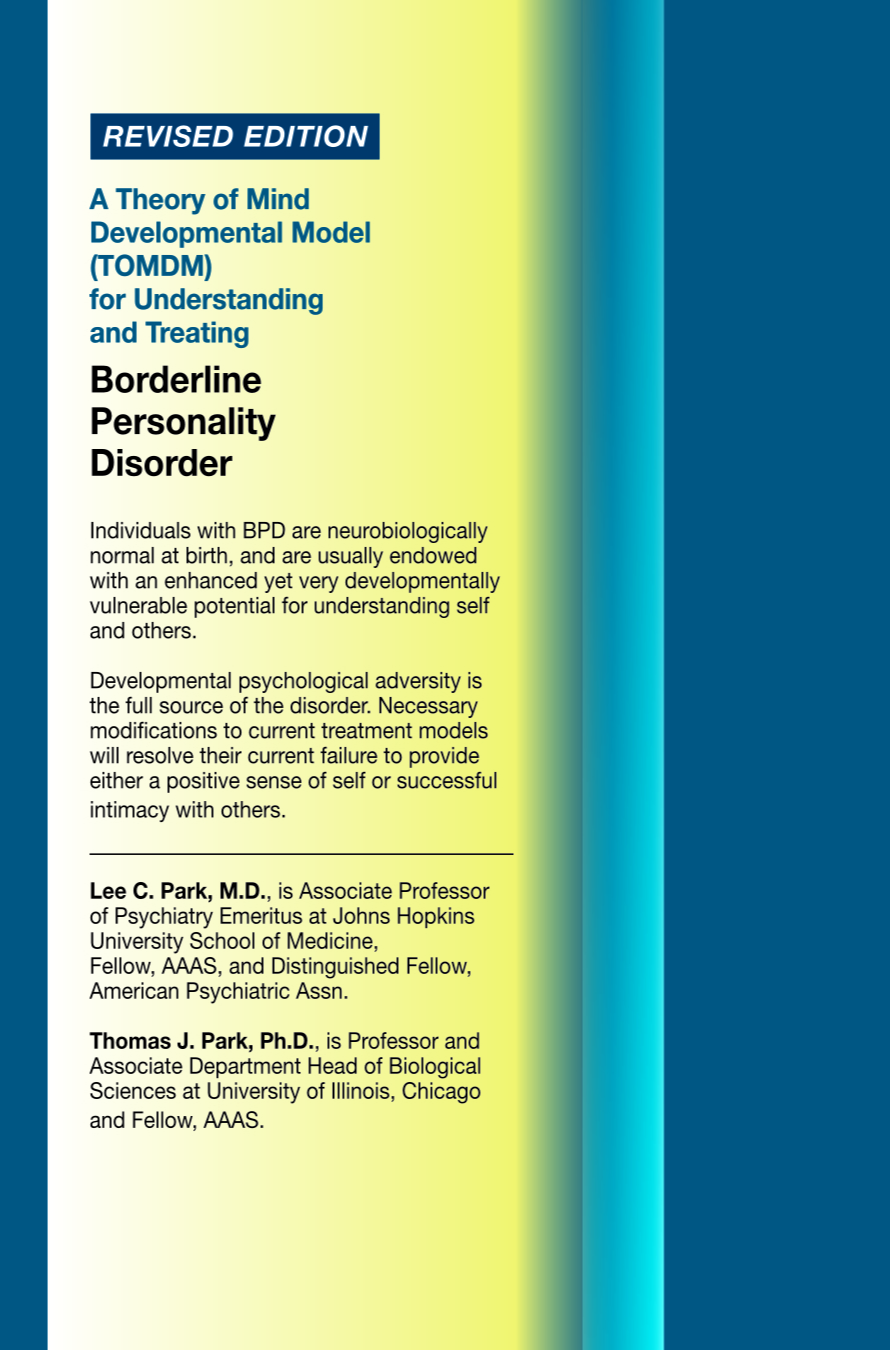
A Theory of Mind Developmental Model (TOMDM) for Understanding and Treating Borderline Personality Disorder
Individuals with BPD are neurobiologically normal at birth, and are usually endowed with an enhanced yet very developmentally vulnerable potential for understanding self and others.
Developmental psychological adversity is the full source of the disorder. Necessary modifications to current treatment models will resolve their current failure to provide either a positive sense of self or successful intimacy with others.
Please direct all correspondence and book requests to:
LPark3@jhmi.edu (Paperback book will be mailed free if requested here)
Library of Congress Control Number 2023915725
ISBN 979-8-218-35544-9
Authors:
Lee C. Park, M.D., is Associate Professor
of Psychiatry Emeritus at Johns Hopkins
University School of Medicine,
Fellow, AAAS, and Distinguished Fellow,
American Psychiatric Assn.
Thomas J. Park, Ph.D., is Professor and
Associate Department Head of Biological
Sciences at University of Illinois, Chicago
and Fellow, AAAS.
tpark@uic.edu
Published for the authors by
Heron Creek Press, LLC P.O. Box 207
Phoenicia, NY 12464
www.heroncreekpress.com
New Abstract
New Extended Abstract
Monograph